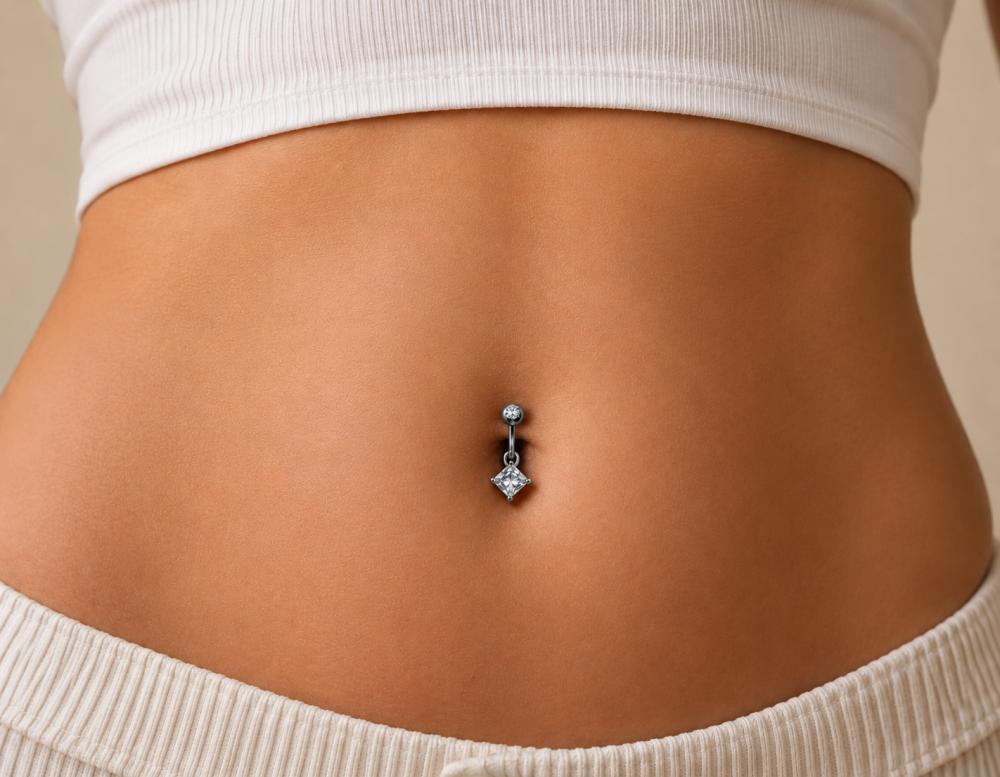
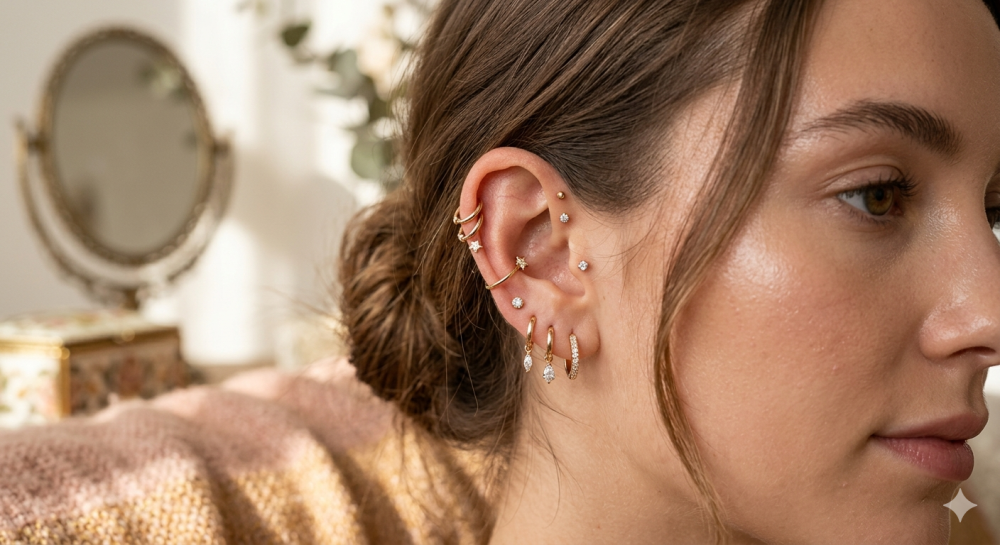
Congratulations on your new piercing! 🎉 Whether it's in the cartilage, lobe, or septum, a new look always gives you a feeling of confidence and distinction. But to ensure this experience is enjoyable and you can appreciate the beauty of your new piercing without any problems, there's a very important stage you need to go through smoothly: the healing stage.
The biggest concern for every girl after getting a piercing is: "How do I protect my ears from infection and swelling?" In this guide from MONEA Piercing, we've compiled the essential medical and practical tips on caring for your new piercing to prevent infection, along with simple daily steps to ensure healthy and beautiful ears.
Why might a new piercing become infected?
Before we get into the steps, it's important to understand that a new piercing is like an "open wound" that needs time to close and form healthy inner skin. During this period, any bacteria entering the piercing, or any pulling or forceful movement of the ear can cause irritation, swelling, or painful inflammation. Therefore, sticking to a daily routine is key to comfortable ears!
A routine for caring for your new piercing to prevent infection.
Here are the golden steps that should be applied twice daily (morning and evening):
1. Hand hygiene first and foremost
The biggest cause of bacteria transfer to a piercing is accidental touching. A basic rule: Never touch your ear or throat unless you have washed your hands thoroughly with antibacterial soap and water for 20 seconds.
2. Saltwater rinse (medical saline solution)
Stay away from rubbing alcohol, medical wipes, or Dettol altogether; because they are very harsh, dry out the skin, and delay healing.
• The healthy alternative: Use a saline spray available in pharmacies, or make it at home (a quarter teaspoon of non-iodized sea salt in a cup of warm water).
• How to use: Spray on the piercing from the front and back, leave it for a minute to dissolve any dried clumps or secretions, then dry it very gently using a clean tissue or cotton swab (light wiping without pressure).
3. Leave the earring alone! (Don't turn it)
A common old mistake was the advice to "rotate the earring so it doesn't stick." This is completely wrong; rotating the earring cuts the new tissue that's trying to heal, and it peels away the wound from the inside, causing that annoying "cartilage bump." Leave the earring completely still.
Daily habits to avoid to protect your piercing
To complete your new piercing care plan and prevent infection , pay attention to these small details in your day:
• Be careful not to sleep on it: Pressure on a new piercing while sleeping changes the angle of the piercing and causes immediate irritation. If you usually sleep on your side, use a U-shaped travel pillow and position your ear in the middle.
• Be careful with clothes and hair: Be very careful when putting on and taking off T-shirts or headscarves, and when combing your hair, so that the earring does not get caught and pulled too hard.
• Avoid makeup and perfumes: When spraying perfumes or applying foundation and creams, cover your ear with your hand; because these substances reaching the new piercing cause chemical inflammation.
The secret to safety: the quality of the primary ring metal.
Did you know that many cases of inflammation are not due to lack of cleaning, but rather to the material of the earring itself? Cheap metals containing nickel cause allergies and persistent irritation of the ear.
The option recommended by piercing experts worldwide is to use medical titanium (ASTM F-136) or surgical steel (Surgical Steel 316L) as a primary ring, because they are raw metals, very light, completely nickel-free, and waterproof, which means 100% safety for your sensitive skin.
MONEA Tip: If your current piercing is causing persistent itching or irritation despite your best care, it might be time to replace it with a safe, medical-grade piercing. Browse our luxurious and safe selection of medical-grade titanium and surgical steel at MONEA Piercing here and enjoy a dazzling shine and comfortable, allergy-free ears!
When will the recovery period end and when can I get my throat changed?
The duration varies depending on the location of the piercing:
• Ear lobe (lobule): It takes approximately 6 to 8 weeks.
• Ear cartilage (Helix / Tragus): It needs 3 to 6 months (and sometimes up to a year) because the blood supply to the cartilage is less.
Always remember: Don't rush to change your earring before it has fully healed, so that the piercing doesn't close or become irritated.
The piercing care process simply requires a little patience and commitment, after which you'll have beautifully styled ears! If you have any questions about piercing sizes or are looking for a specific piece, the MONEA Piercing team is always happy to help. Visit our store now and discover the world of safe, medically-safe style.